
Single braid for edges: is a Single Braid (2 hours and plus) right for thinning edges?
By The Braiding Place Elgin | September 9, 2026
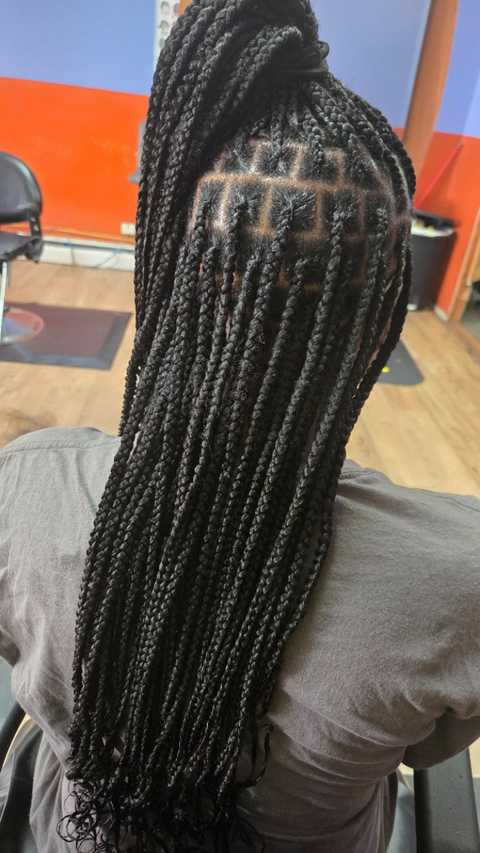
If you’re worried about thinning edges, I’m going to be straight with you: a Single Braid (2 hours and plus) can protect your edges when I install it with light tension and minimal added weight, but it’s not the best move if your edges are actively breaking or feel extremely fragile. I hear a version of this all the time in Elgin, people come in nervous because a past style was too tight, and then they leave relieved when they realize braids don’t have to hurt. One first-timer put it perfectly: “She was very gentle while doing my hair and didn’t do my hair extremely tight.”
Thinning edges usually come from tension and friction, not “bad hair”
Edges thin out for a few common reasons, and most of them are fixable with better habits and a style choice that doesn’t keep pulling on the same tiny area. Consistent tension is the big one: tight braids, slick ponytails, heavy extensions, and repeated re-gripping at the hairline. Friction matters too. Scarves that slide, helmet straps, coat collars in winter, and even constant touching can stress the perimeter over time.
Around Downtown Elgin, I see a lot of people who commute on Metra or drive I-90 and want something that stays neat through daily travel, errands, and weekend events. That’s real life. If you’re already tired of doing your edges every morning, the goal is a protective style that cuts down daily manipulation without replacing it with high tension.
Quick edge check: If your hairline feels sore, bumpy, or itchy after styling, that’s your cue to go lighter next time. Pain is not “normal.”
How I make a Single Braid (2 hours and plus) edge-friendly, tension, weight, and parts
A Single Braid (2 hours and plus) works as a protective style because it gives your hands a break. When the install is done right, you aren’t brushing, slicking, and pulling at your hairline every day. That reduced manipulation is often what edges need most.
But the install is everything. I focus on three things when you tell me your edges are thinning:
- Light tension at the hairline. I don’t “snatch” edges. If you’ve ever had braids so tight you couldn’t sleep, that’s what I avoid.
- Minimal added weight. Heavy hair plus a fragile perimeter is a bad combo. I’ll talk through what you’re hoping for and keep it realistic for your density.
- Clean, soft parting. Neat sections help the braid sit right without having to over-tighten to “make it last.”
That’s why this service takes time. The “2 hours and plus” isn’t about dragging things out. It’s meticulous work so the braid looks polished and feels comfortable. People notice the difference right away. I’ve had clients walk out saying, “I absolutely love my hair, ” and the part that matters for edges is that they’re not saying it through a headache.
“She was very gentle while doing my hair and didn’t do my hair extremely tight.”
One of our first-time clients
Midwest weather note: Hot, humid summers can make scalp sweat and frizz show up faster. Cold winters can dry your hair out. Either way, the answer isn’t tighter braids. It’s better scalp care and a tension level your edges can actually handle.
A simple single braid maintenance routine that protects edges
If you want braids for thinning edges, maintenance is where you win. I’m not asking you to do a lot. I’m asking you to do the right few things consistently.
Keep your scalp comfortable, not greasy
Use a light moisturizer on your scalp as needed, especially in winter. If you’re flaky, itchy, or feeling tightness, that’s usually a sign you need moisture or a gentler cleanse, not more product piled on the hairline.
Protect at night, every night
A satin bonnet or scarf reduces friction on your edges while you sleep. That one step does more for edge retention than most “edge growth” hacks you see online.
Know when it’s time to refresh
If your braid starts feeling heavy at the front because of new growth and product buildup, don’t ignore it. Let me know what you’re noticing and I’ll point you toward the next step, a touch-up, a take-down, or switching styles for a while.
Want deeper aftercare? I broke it down step-by-step in single braid aftercare for 2-hour-plus installs.
Is a Single Braid (2 hours and plus) the right choice, or should you go knotless instead?
A Single Braid (2 hours and plus) tends to be a great fit if you want a polished look that holds up with minimal daily styling and you care most about keeping tension light at the perimeter. It’s also a practical option if you need your hair neat and manageable for something specific, I’ve had people come in because they needed their hair braided for surgery so it wouldn’t turn into a tangled mess.
If your edges are very fragile or you’re seeing active breakage, I’ll usually steer you toward a lower-tension option like knotless braids, or sometimes a shorter-term protective style so you can reset without extra weight. And if your scalp has open sores or irritation, it’s smarter to pause on braids until your scalp calms down.
If you want the side-by-side comparison, I wrote it out in plain language here: Single Braid vs. knotless braids.
Why people keep coming back to The Braiding Place Elgin (and how to start)
I’ve been braiding in Elgin for 15 years, and I’ve learned something simple: people don’t return just because a style looks good on day one. They return because the experience is calm, the braids are done with care, and they feel listened to. I’m proud that so many families come in together and that I’m trusted with kids’ first braids too. Patience matters in this work.
“My family and I have been coming here for eight years, I love how they braid our hair.”
One of our regulars
You’ll find us in Downtown Elgin, right in the central business and historic district along West Chicago Street near the Fox River and the Hemmens Cultural Center. I see a lot of people coming in from South Elgin, Bartlett, Streamwood, Carpentersville, East Dundee, and West Dundee because they want a braid shop that takes edge concerns seriously.
Want me to look at your edges before we commit to a long install?
Send your inspiration, tell me what’s been happening at your hairline, and I’ll be honest about what style makes sense right now. If a Single Braid (2 hours and plus) is right, we’ll keep it light and comfortable. If it’s not, I’ll point you to a better option.
Visit: 119 West Chicago Street, Elgin, Illinois 60123
Call: +18474681887 | Email: kelojou@gmail.com
If longevity is your main concern: read how long a Single Braid (2 hours and plus) can last and what shortens wear time in our Midwest seasons.
FAQ: Single Braid (2 hours and plus) and thinning edges
Will a Single Braid (2 hours and plus) damage my edges?
It can if it’s installed too tight or with too much added weight, especially right at the hairline. When you tell me your edges are thinning, I keep tension light, avoid over-gripping the perimeter, and talk you through what’s realistic for your hair density. If your edges are extremely fragile or actively breaking, I’ll recommend a gentler option instead of forcing this style.
How long does a Single Braid (2 hours and plus) usually last?
Longevity depends on your hair texture, how much your scalp sweats, and how you protect your braid at night. In general, night protection and gentle scalp care help you keep the style looking neat longer. If you want help deciding what “good wear time” looks like for you, I’ll talk it through during your visit.
How should I prepare my hair before getting a Single Braid (2 hours and plus)?
Come in with your hair clean, detangled, and fully dry. If you’re prone to dryness, moisturize ahead of time, but skip heavy buildup at the scalp. And if you’ve had irritation at the hairline recently, let me know so I can keep everything extra gentle.
What at-home care helps protect edges while wearing a single braid?
Protect your hair at night with satin to reduce friction, keep scalp moisture light and consistent, and don’t pull on the braid to style it. If you feel soreness at the hairline, don’t wait it out. Reach out so we can troubleshoot before it turns into breakage.
Is a Single Braid (2 hours and plus) better than a knotless braid for thinning hair?
For thinning edges, knotless braids often feel lighter at the base, which can be a safer choice if your perimeter is very sensitive. A Single Braid (2 hours and plus) can still be a great protective option when I keep tension low and weight minimal. The best answer depends on what your edges can handle right now, and I’ll be honest about that when you come in.
