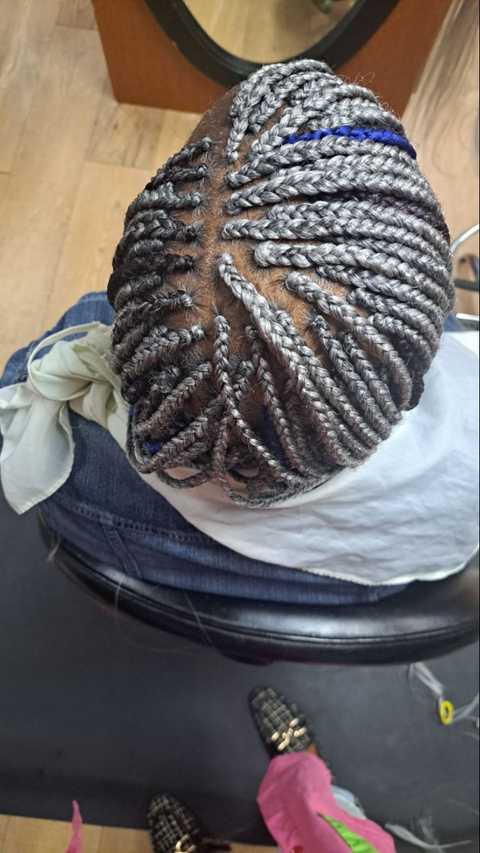
Single Braid Aftercare (2 hours and plus): Clear Aftercare for the First 2 Weeks
By The Braiding Place Elgin | July 29, 2026
Downtown Elgin | 119 West Chicago Street, Elgin, Illinois 60123 | +18474681887 | kelojou@gmail.com

The most important single braid aftercare rule is simple: protect the style for the first 48 hours. Keep it dry, keep sweating to a minimum, and don’t pull it into tight updos yet. We see the difference this makes, especially for people who need their braids to stay neat and manageable right away, like the client who came in last-minute for surgery prep so their hair “wouldn’t be a tangled mess.” If you’re in Elgin and you just left our chairs, this guide covers exactly what to do for the next two weeks.
Your first 24 to 48 hours: keep Single Braids calm, dry, and low-tension
Right after a 2+ hour Single Braid appointment, your scalp and hair are settling. Even when we braid gently, new parts and fresh tension need a little quiet time. This is the window that helps your braids stay crisp longer.
First 48-hour checklist: Don’t wash yet. Skip heavy workouts that make you sweat a lot. Don’t soak your scalp in oil. Don’t style into a tight ponytail or bun. Do protect at night with satin. Do use a light, water-based spray if your scalp feels dry.
Sweat and humidity in Downtown Elgin
If you’re walking around Downtown Elgin in summer heat, heading to festivals, or hustling to the Metra, sweat is the quickest way to invite frizz at the roots. We generally recommend waiting 48 to 72 hours before high-sweat workouts. If you have to move around, keep your scalp as cool as you can, blot with a clean towel, and let your roots air-dry fully.
If anything feels too tight
A little tenderness is common on day one. Sharp pain, bumps forming, or a headache that won’t let up is not something to push through. Let us know. We’d rather adjust a spot early than have you miserable for days.
Days 3 to 7: the habits that keep your parts neat
Once you’re past the first two days, your job is keeping build-up and friction down. That’s what usually keeps Single Braids looking fresh instead of fuzzy.
Washing: slow down and be gentle
If you decide to cleanse in the first week, keep it light. Focus on your scalp, not the length of the braid. Use lukewarm water and avoid aggressive scrubbing that lifts frizz at the root. Pat dry, then let it air-dry fully. Going to bed with damp braids tends to create that “puffy” look fast.
Commuter-proof day-to-day styling
If you’re getting ready for a Hemmens Cultural Center night, keep your first-week styling simple. Loose half-up styles are usually safer than a tight, high pony that pulls on edges. And if your hair is shorter, don’t stress. We’ve had clients come in thinking French braids wouldn’t work because their hair “isn’t that long, ” and we still make it work. Aftercare is what keeps that clean look from slipping.
Swimming and lake days near Elgin
Chlorine and lake water both rough up the hair cuticle and can leave your scalp itchy. If you swim after the first 48 to 72 hours, wear a swim cap when you can. Rinse as soon as you’re done, then dry your braids all the way through. This matters in Midwest summers, where humidity already tries to lift frizz.
Moisture without grease: simple braid maintenance tips that actually help
A lot of people accidentally shorten the life of their braids by over-oiling. Heavy oil collects lint, sticks to the base of the braid, and turns into build-up fast.
Our go-to routine (easy to follow)
- 1 to 3 times a week: mist a light, water-based leave-in or braid spray onto the scalp and parts.
- If you use oil: use it sparingly and apply it to the scalp only, not down the braid.
- Hands off: don’t pick at your parts or scratch with nails. Tap or press instead, or use a clean cloth.
- Edge care: keep edge control light in week one. Too much product at the hairline turns into flakes fast.
In Midwest winters, the air gets dry and your scalp can feel tight. That’s when the water-based spray matters most. In humid months, you can usually spray less often and focus on keeping your roots dry and protected.
Sleeping with braids: the 2-minute routine that saves your edges
Nighttime is where most frizz starts. Cotton pillowcases grab hair. Tossing and turning creates friction. And tight edges overnight can make you sore in the morning.
What we want you to do before bed
- Wrap with a satin scarf or wear a satin bonnet. If you hate bonnets, a satin pillowcase is the backup plan.
- If your hairline feels tight, gently loosen any front pieces that are pulling before you tie down.
- Keep braids in a loose low pony or two loose sections. Avoid a tight top-knot in the first week.
- Wake up and shake them out. Don’t yank a brush through fresh parts.
This is also why our work stays comfortable for so many people. We hear “very gentle” a lot, and good at-home protection helps that gentle feel last beyond day one.
Loose rows, scalp pain, or gaps: when to come back in (and we’ll fix it)
If something feels off, don’t wait until it’s a full problem. The earlier we see it, the easier it is to correct.
Reach out if: you have persistent pain past day two, you see visible scalp gaps where braids shifted, you notice loose rows, or you’re getting irritation that doesn’t calm down. We often recommend a quick check within 1 to 2 weeks if you’re unsure.
People drive in to Downtown Elgin from South Elgin, Bartlett, Streamwood, Carpentersville, East Dundee, and West Dundee because they want braids that look right and feel right. A lot of our families have been coming for years, and that’s not by accident. We keep it friendly, we move with purpose, and we don’t leave you guessing on care.
“My family and I have been coming here for eight years, I love how they braid our hair.”
one of our regulars
If you want to stretch the life of your style, we also broke it down in our Single Braid (2 hours) longevity guide. And if you’re planning your next look, you can browse our braid gallery or skim our full services list to line up your next appointment.