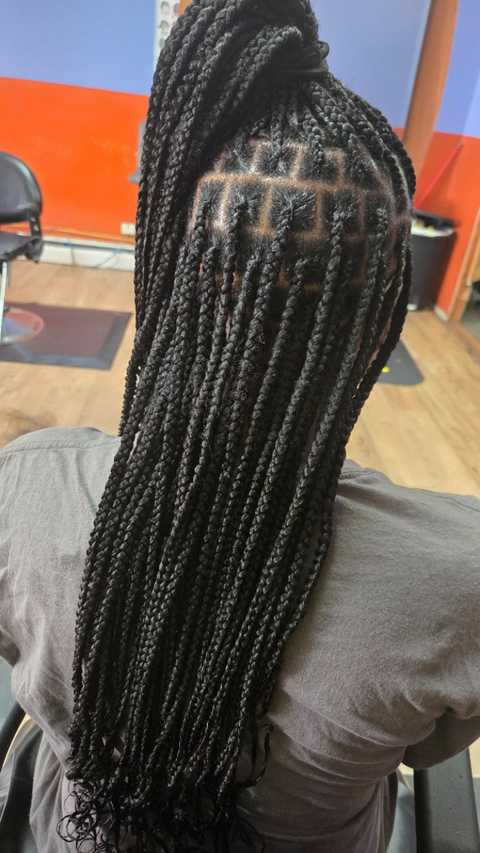
French braid for frizz: how I keep your hair neat after the Metra
By The Braiding Place Elgin | September 16, 2026
I hear this a lot in Elgin: you leave the house looking smooth, then the Metra ride, a windy platform, or Midwest humidity turns your hair into flyaways. Yes, a properly done French braid is a low-damage way to control frizz and keep hair tidy on commutes and humid days, especially on medium-to-long hair. And I love hearing things like, “I am really happy with how my braids turned out” because that neat, secure finish is exactly what frizz-prone hair needs.

Quick reality check: A French braid helps most when your hair is long enough to fully catch into the braid. If your hair is very short or severely matted, I’ll steer you toward a different style that holds better and feels better.
Why commuter frizz hits so hard in Downtown Elgin
Frizz usually isn’t about “messy hair.” It’s friction plus weather. On a commute you’ve got coat collars rubbing, scarf static, headphone snags, and that constant in-and-out of dry indoor air and outdoor moisture. Summer in Illinois adds humidity, and winter brings dry heat and static, so your hair keeps reacting all year.
I see it with people who ride the Metra and also with the I-90 crowd. You need a style that stays put through travel, school drop-offs, and then still looks intentional when you’re walking around Downtown Elgin near West Chicago Street, heading to the riverfront, or getting ready for a night at the Hemmens Cultural Center.
How a long-lasting French braid reduces frizz (and why it feels “neat”)
A French braid works because it tucks your hair in, instead of leaving it loose to swell up, snag, and fluff. When I braid, I’m gradually feeding sections into one braid down the head. That reduces surface exposure, which means less hair rubbing on your jacket and less moisture hitting every strand.
I also pay attention to comfort. Tight braids might look sleek for an hour, then they start pulling and you end up adjusting all day. I don’t braid extremely tight. People notice the difference, and they say it out loud when they’ve had rough experiences elsewhere.
“She was very gentle while doing my hair and didn’t do my hair extremely tight.”
A first-time visitor
My hold tips for humid weather and train days
- I start with clean sectioning and a thorough detangle, because tangles under a braid are where frizz starts later.
- I use a light control product when it makes sense, especially around the hairline, so flyaways don’t pop up halfway through your commute.
- I finish with secure anchoring, so the braid doesn’t loosen at the bottom as you move through the day.
If you want to keep it looking fresh longer, I also recommend checking out French braid aftercare for the first 48 hours. Small habits make a big difference.
Is a French braid right for your hair length and texture?
A French braid tends to work best on medium-to-long hair because I can fully capture the lengths and keep the ends tucked. If your hair isn’t that long, I can often still make it work. Someone recently told me, “My hair isn’t that long for french braids but they made it work.” That’s usually about smart section size and clean anchoring, not forcing tight tension.
Curly and thick hair can hold a braid beautifully, it just needs patient detangling and a braid pattern that doesn’t snag. And if you’re getting braided for pure manageability, like keeping hair out of the way for an appointment or an event, a French braid is a solid choice.
When I’ll suggest an alternative: If you want more “grip” at the scalp, I might recommend a Dutch braid. If your hair is too short to catch cleanly, a low bun or another protective option will look smoother and stay put longer. You can compare the difference in French braid vs. Dutch braid.
Downtown Elgin braids that fit real schedules (and real life)
I’ve been braiding in Elgin for 15 years, and I’ve learned that “pretty” isn’t enough. You need dependable. People come to me because they can get in quickly when something comes up, and because the work holds up. One person put it plainly: “They were very welcoming and took me an hour after I called. Super fast and highly recommend!”
That matters when you’re trying to get out the door, beat traffic, or show up looking pulled-together for a riverfront festival. And if you’re coming in from South Elgin, Bartlett, Streamwood, Carpentersville, East Dundee, or West Dundee, a French braid is a great choice because it’s neat without being heavy.
If this is your first time getting a French braid done professionally, I wrote a straight-ahead guide to help you feel prepared: what to expect for your first French braid.
Ready for a protective braid for frizz? Let’s keep it simple.
If your goal is to step off the Metra with your hair still looking neat, I’d love to help. When you reach out, tell me two things: your hair length and what you want the braid to survive, like humidity, a long commute, or an evening event near West Chicago Street in Downtown Elgin. I’ll guide you to the right braid choice and tension so it looks clean and feels comfortable.
Call: +18474681887 | Email: kelojou@gmail.com
Visit: 119 West Chicago Street, Elgin, Illinois 60123
French braid for frizz: the 5 questions I get all the time
Is a French braid good for preventing frizz on humid days?
Yes. A French braid keeps more of your hair tucked in and protected, so humidity has less surface area to puff up. The smoother the sections and the cleaner the finish, the less you’ll fight flyaways on a humid Midwest day.
How long will a salon-done French braid last on my commute?
For most people, it holds through the day and commute without needing a full redo, especially if you avoid constant touching and keep friction down around the collar and scarf area. Your exact hold depends on hair length, texture, and how snug you like the braid.
Can I wash my hair after getting a French braid?
You can, but washing will usually loosen the braid and bring back frizz faster. If you know you need a wash soon, tell me before I start so I can help you pick the best timing and a style choice that matches your schedule.
Will having a French braid damage my hair if I wear it often?
A French braid is generally low-damage when it’s not too tight and you’re not keeping it in for so long that it mats at the roots. The biggest risk is tension and friction, so I focus on comfortable braiding and a secure, clean finish that doesn’t make you tug at it all day.
How should I prepare my hair before getting a French braid at the salon?
Come with your hair detangled if you can, and avoid heavy oils that make sections slippery. If your hair tangles easily, a gentle detangle at home can save time and keep the braid smoother. And if you have a reference photo or video, bring it. I’m used to working from inspiration and matching the look you’re aiming for.