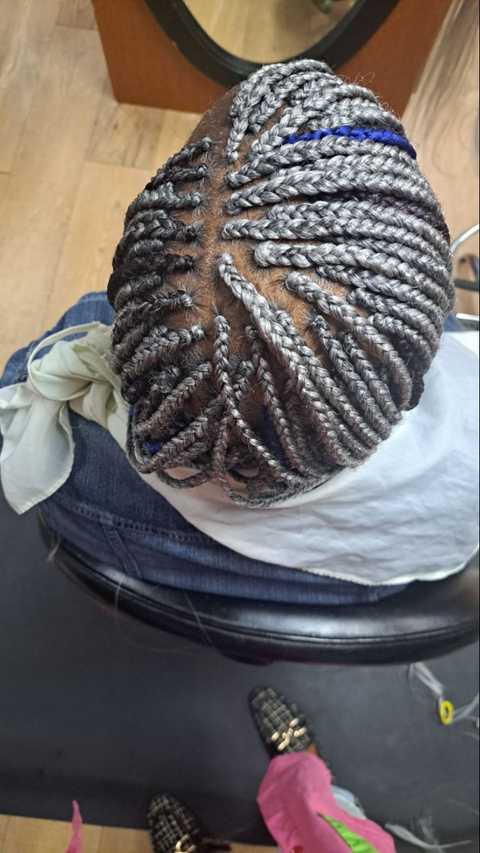
French Braid aftercare: what to do for the first 48 hours
By The Braiding Place Elgin | July 15, 2026

We’ve had people come in because they needed their hair braided for surgery so it wouldn’t be a tangled mess, and the same rule applies for everyone: keep your French braid dry and as undisturbed as possible for the first 24 to 48 hours. That’s how you protect the neatness we just put in, especially with Elgin humidity and busy schedules. Give it a short “set” period, then you can start doing light maintenance without loosening everything up.
Your first 24 to 48 hours: keep it neat without overdoing it
Right after we braid, the biggest goal is simple. Don’t soak it, don’t scrub it, and don’t keep adjusting it in the mirror every ten minutes. Friction and moisture are what make a fresh braid puff up fast.
48-hour priority: Keep water off the braid, avoid heavy sweating, and protect it at night with satin or silk so you don’t wake up to frizz.
Quick do’s
- If you need a shower, tie the braid back and use a shower cap. Keep steam exposure short if you can.
- If your scalp feels warm or a little sweaty, press a clean towel against your hairline. Don’t rub.
- If you’re heading into Downtown Elgin for an evening out near West Chicago Street, keep a small silk scarf in your bag. It’s an easy frizz shield if the wind kicks up near the Fox River.
Quick don’ts
- Skip high-intensity workouts for 24 to 48 hours if possible. Sweat and constant movement loosen a fresh braid faster than you think.
- Don’t add heavy creams or thick butters to “make it shiny.” They weigh the braid down and can make it slip.
- Don’t re-tighten with extra elastics. That’s where breakage starts.
Days 3 to 7: keeping that “just braided” look in Elgin summer weather
Once you’re past the first two days, your French braid is usually easier to live in. This is when Elgin’s hot, humid summers show up, especially if you’re out for riverfront festivals or heading to a show at the Hemmens Cultural Center. The braid can start to fuzz at the crown first, and that’s normal.
If your hair is shorter, we can still make a French braid work, but shorter pieces will try to slip out sooner. Be gentle with the edges and don’t pick at flyaways. Smooth them down lightly with your fingertips and a tiny bit of lightweight oil if you need it.
And if your texture is curly, don’t panic if your braid starts to “bloom” a little. A lot of our curly-haired clients love the look. What keeps it pretty is keeping friction low at night and keeping product light during the day.
Commuter tip: If you’re traveling in from South Elgin, Bartlett, Streamwood, Carpentersville, or the Dundeess, toss a travel dry shampoo and a small satin scarf in your bag. Great for a quick refresh after a Metra ride or an I-90 commute.
Scalp products that won’t loosen your French braid
Your scalp should feel calm, not greasy. We generally recommend keeping your product routine simple while you’re wearing a French braid, especially in the first week.
Go-to options
- Dry shampoo (light use): Aim it at the scalp, not down the braid. Let it sit a minute, then tap it out with your fingertips.
- Lightweight oil (a drop or two): Warm it between your fingers and pat it on the scalp where you feel dry. Don’t slick the braid itself.
- Edge control (sparingly): Only if you need it for a specific event. Too much builds up fast and can make the braid look dull.
Skip heavy leave-ins, thick creams, and anything that leaves a waxy coating. Those products tend to attract lint, especially if you’re wearing darker tops or hoodies.
Sleeping with a French braid: 2 setups that actually work
Nighttime is where most braids either stay neat or start looking tired. If you wake up with frizz, it’s usually not because the braid was “done wrong.” It’s friction.
Option 1: Satin or silk wrap
Wrap your hair so the braid is covered and secure, but not smashed flat. If you’re a restless sleeper, this is usually the easiest way to protect the crown and hairline.
Option 2: Satin pillowcase + loose tie
If you don’t like wrapping your hair, use a satin pillowcase and gather the braid with a soft scrunchie. Keep it loose. Tight ties create dents and stress the hair.
When to reach out to our team in Downtown Elgin (and when it’s totally normal)
A little soft frizz over time is normal. A few flyaways are normal. What we don’t want is you feeling like you have to “push through” discomfort.
Reach out if your braid feels painfully tight, you notice irritation that’s getting worse, or sections are slipping fast and you have an event coming up. We’re used to last-minute needs, and people tell us we’re quick, welcoming, and gentle, even on curly hair that takes extra care before it’s combed out.
"I have been coming for over 6 years! I love how my hair turns out. They get me in quick and are very friendly!"
one of our regulars
If you’re planning a Downtown Elgin night out: Give yourself that 48-hour window before a performance at the Hemmens Cultural Center or a riverfront weekend. It’s the simplest way to keep your braid looking crisp in photos.
Want us to take a look or set you up again? Call +18474681887 or email kelojou@gmail.com. We’re right here in Downtown Elgin at 119 West Chicago Street, Elgin, Illinois 60123.