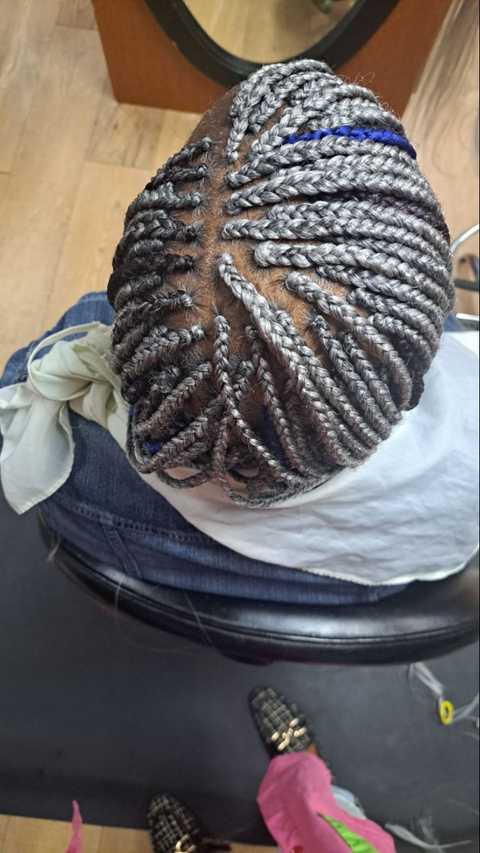
Ghana Braids for edges: thinning hairline help, and when to skip it
By The Braiding Place Elgin | August 9, 2026
A lot of people come to The Braiding Place Elgin saying they’re really happy with how their braids turned out, but they still have one worry in the back of their mind: thinning edges. Here’s the honest answer. Ghana Braids can protect thinning edges when we keep the tension light, the parting soft, and your braid size reasonable so your hairline isn’t doing the heavy lifting. But if your edges are already fragile or actively breaking, we’ll steer you toward a looser install or a different style first.
We’re right in Downtown Elgin near West Chicago Street, close to the Fox River and the Hemmens Cultural Center, so we see plenty of people who want a neat, long-lasting style that holds up through busy weeks, commutes, and events.
Thinning edges usually aren’t “random”, and daily habits matter
Edges tend to thin when they’re under constant stress. That can look like tight ponytails, heavy extensions, frequent brushing at the hairline, glue and adhesive removal, or styles that keep pulling in the same spots. Sometimes it’s not even the style. It’s the repeat styling before work, after the gym, before a night out, then again after a weekend event.
In the Midwest, the seasons don’t play fair either. Hot, humid summers can make you touch your hair more because of frizz and sweat. Cold winters can leave the hairline dry and brittle, so one rough scarf day can turn into breakage.
Quick self-check: If your scalp feels sore after styling, or your hairline looks “pulled back” when you raise your eyebrows, that’s your sign to go looser.
Why Ghana Braids can be edge-friendly, if we install them the right way
Ghana Braids are a raised braid style that adds volume and flair. The reason they can work as protective styles for thinning hair is simple: they cut down daily manipulation. Less brushing, less tight pulling, less constant re-doing at the hairline. When your edges get a break, they usually behave better.
“She was very gentle while doing my hair and didn’t do my hair extremely tight.”
one of our first-time visitors
The three technique choices that protect your hairline
- Light, even tension: Ghana Braids should feel snug, not painful. If it hurts, it’s too tight. If you get bumps at the hairline, it’s too tight.
- Soft parting and smart placement: We keep the front clean, but we don’t carve razor-sharp parts that stress already-thin edges. If your hairline has weak spots, we adjust where the braid starts so it’s supported.
- Small-to-medium braid weight: Super heavy braids can drag. For thinning edges, we usually keep the look full without making your hairline carry extra weight.
Ghana braids aftercare that actually saves edges
Aftercare is where most edge damage happens. People rub the hairline hard to “clean it, ” over-oil until there’s buildup, or keep braids in way past their expiration date.
Cleanse gently: Use a gentle scalp cleanse and focus on the scalp, not scrubbing your edges like you’re washing dishes.
Oil lightly: A little goes a long way. Light oiling can help with dryness, especially in Elgin winters, but keep it light so you don’t create buildup at the hairline.
Stick to 6 to 8 weeks: That’s the sweet spot for most people. Past that, new growth and tangling can turn takedown day into breakage day.
If you want a bigger picture on low-maintenance installs that support growth, read our Ghana braids low-maintenance growth guide.
Is this the best braid choice for your edges right now?
Ghana Braids tend to be a great fit if your hair is generally healthy and you want a style that stays neat through humid summer weekends, long workdays, and nights out around Downtown Elgin. People also love them before Hemmens Cultural Center events because you don’t have to keep fixing your hair in the mirror.
If you’re actively shedding or your hairline is severely thinning, we usually recommend going looser first. Think loose twists, knotless or feed-in cornrows with less tension at the front, shorter-term braids, or even a wig break while you baby your edges.
Time matters too. We’ve had clients tell us they like having two braiders working at once because it helps when they don’t have a lot of time. If your schedule is tight, tell us up front so we can recommend a size and pattern that makes sense.
Why families across Elgin trust us with edge-friendly braids
We’ve been braiding in Elgin for 15 years, and our team doesn’t treat “don’t braid too tight” like a suggestion. We take it seriously, especially around the hairline. That’s a big reason anxious first-timers relax once we get started, and why people keep coming back with their kids, sisters, and friends.
“My family and I have been coming here for eight years, I love how they braid our hair.”
one of our regulars
We serve Downtown Elgin and nearby communities including South Elgin, Bartlett, Streamwood, Carpentersville, East Dundee, and West Dundee. If you’re commuting in, tell us what your edges have been through and what you need day-to-day. We’ll guide you to the braid pattern and tension level that makes sense.
View braiding services
See Ghana Braids photos in our gallery
Get details on visiting our Downtown Elgin shop
Want a quick consult before you commit? Bring a reference photo and tell us what’s happening at your hairline. We’ll be straight with you about Ghana Braids, and if it’s not the best move right now, we’ll point you to an edge-friendly option.
Questions we get all the time about Ghana braids and thinning edges
You can always call us too: +18474681887 | kelojou@gmail.com | 119 West Chicago Street, Elgin, Illinois 60123