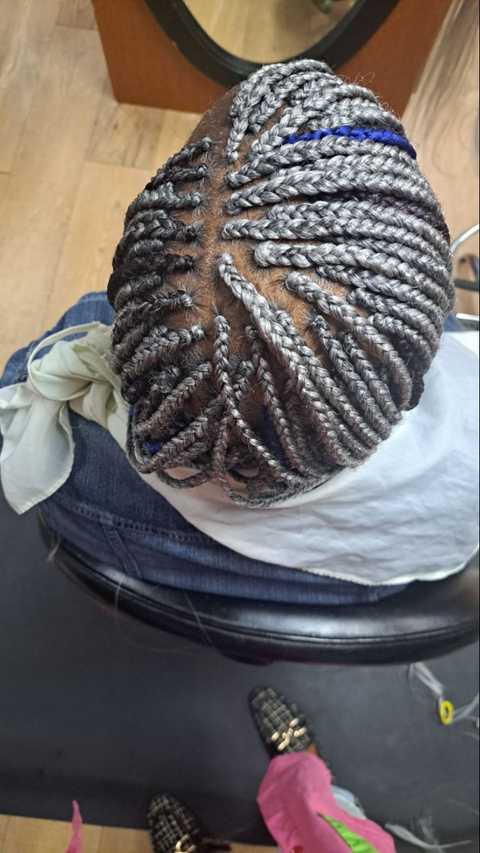
Box braids for thinning edges: are they safe?
By The Braiding Place Elgin | July 12, 2026
We hear “I’m really happy with how my braids turned out” a lot, and if your edges are thinning, that kind of relief matters. Short answer: box braids can be a protective option for thinning edges when we keep the install loose, the braid weight light, and the hairline parts bigger. But tight braids, heavy extensions, or wearing them too long can push traction-related thinning in the wrong direction. We’ll check your edges first, then decide together what makes sense for you here in Elgin.

If you’re coming in from Downtown Elgin, the Fox River area, or you’re heading to something at the Hemmens Cultural Center, braids are a favorite because they hold up through Midwest weather swings. The goal with thinning edges is simple: protect what you have while keeping tension low.
Thinning edges usually come from tension, not “bad hair”
Edges tend to thin when the hairline gets pulled on over and over. That can be tight ponytails, slick buns, sew-ins that grab the perimeter, braids installed too snug, or even frequent hats and headbands that rub the same spots. And in Elgin summers, sweat and buildup can make the scalp feel irritated, which makes people scratch or over-wash. That doesn’t help fragile edges.
We also see thinning that’s really breakage. The hair is there, but it’s snapping faster than it grows because it’s dry, over-manipulated, or constantly brushed down. That’s why we don’t jump straight into “small and long” braids at the hairline if you’re already worried. Protective styles for thinning hair only work when they reduce daily stress.
Quick self-check before you book: If your edges feel sore, bumpy, or hot to the touch after styling, that’s a tension problem. Let us know. We’ll talk you into a softer option instead of forcing box braids.
What makes box braids safer for fine hair and fragile edges
Box braids work for thinning edges when they actually do what they’re supposed to do: give you a break from daily styling. When you’re not brushing, slicking, and re-tightening every morning, that hairline often gets a chance to calm down.
In our chairs, the biggest edge-savers are the unglamorous details. We’ll keep the hairline parts larger so each braid has more of your natural hair supporting it. We’ll also talk through length and extension weight, because heavy, long braids can act like tiny weights all day. If you’ve had a bad experience elsewhere, you’re not alone. We get a lot of first-timers who are nervous, then they relax once they feel the difference of a gentle install.
"She was very gentle while doing my hair and didn’t do my hair extremely tight."
One of our first-time visitors
Our tension rules (especially around the hairline)
- We keep the first row at the perimeter noticeably looser. If you can’t move your eyebrows comfortably, it’s too tight.
- We’ll recommend knotless or larger sizing at the front when edges are thin, even if you do smaller braids elsewhere.
- We avoid grabbing tiny baby hairs to “make it look full.” Those short hairs need time, not tension.
Wear-time that protects your edges: Most people do best taking box braids down in 6 to 8 weeks, depending on your hair health. Keeping them in longer can mean more tangling at the root and more tension from new growth.
Maintenance that actually matters in Midwest seasons
Summer humidity and sweat can make your scalp feel dirty faster. That doesn’t mean you need harsh scrubbing. We usually suggest cleansing your scalp gently, focusing on the parts, then rinsing well and drying thoroughly. A light oil on the scalp can feel good, but heavy product buildup can make itching worse.
And if you’re commuting through Downtown Elgin with a hat on most days, pay attention to friction at the hairline. If you notice constant rubbing, switch to satin-lined options and don’t keep pulling the braids back tight.
Is this the right protective style for your thinning edges?
Box braids are usually a good fit if your edges are thinning from everyday styling and you want a low-maintenance look that stays neat for weeks. They’re also a solid option if you’ve got a packed schedule. Some days we’ll have two braiders alternating so you’re not in the chair forever. People mention being done in a few hours for certain braid styles, and that time matters when you’re trying to make it work after work.
We’ll steer you away from box braids if your hairline is actively sore, inflamed, or breaking off right at the scalp. In that case, lower-tension protective styles like twists or softer feed-in options can be a smarter first step. We also keep it real about braid size. Super small box braids can look amazing, but they can be too much for fine or relaxed hair at the edges if you’re already thinning.
Bring a reference photo. We’re used to it. A recent visitor came in with an Instagram video and we matched the look. That makes it easier to pick a braid size that’s cute and still edge-friendly.
Why families around Elgin trust us with braids (and edges)
We’ve been doing this for 15 years, and we’re still big on the basics: neat parts, clean work, and gentle hands. People come back because they leave satisfied, and because we treat their whole family well. That includes kids who are getting braided for the first time, and adults who are anxious after a bad experience somewhere else.
"My family and I have been coming here for eight years, I love how they braid our hair."
One of our regulars
If you’re coming in from South Elgin, Bartlett, Streamwood, Carpentersville, East Dundee, or West Dundee because you want a style that survives commutes and summer events by the river, we’ll make sure you’re not trading convenience for thinning edges.
Want a quick edge check before you commit? Call us and ask for a scalp and hairline consult for box braids. We’ll look at your perimeter, talk size and length, and tell you honestly if a different low-tension style is the better move right now.
Visit us at 119 West Chicago Street, Elgin, Illinois 60123 | Call +18474681887 | Email kelojou@gmail.com
A simple take-down plan that doesn’t sacrifice your edges
Removal is where a lot of edge damage happens. Plan for time. Rushing and ripping is how hair breaks, especially at the temples. We like a slow takedown with conditioner or a slippery detangler, then gentle finger detangling before you ever grab a comb.
After your braids come out, give your hair a real reset. A deep condition is a good start. Many people also do well alternating moisture-focused care with occasional protein support, especially if your hair has been snapping. Keep the next style low tension for a bit, even if you loved the look of super sleek edges.
If you’re not sure what your edges can handle next, that’s exactly what we talk through in a consult at our Downtown Elgin shop near West Chicago Street. No pressure. Just a clear plan.